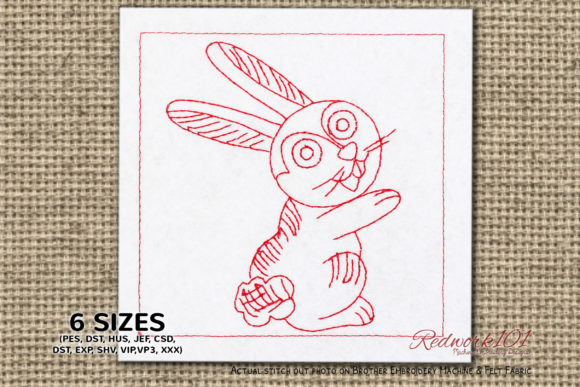
Doodle Bunny: A Practical Review for Real Projects
As a designer who spends hours curating machine embroidery design libraries for both personal craft and client work, I approach every new file with a critical eye. We all know the thrill of finding a fresh character in the Farm Animals category, but the real test is whether that file translates beautifully from the screen to the fabric. Today, I am evaluating Doodle Bunny, an adorable redwork embroidery option that promises to add a happy character to any textile. Before you download this embroidery file or feature it in your next Etsy listing, let’s break down exactly how it performs in the wild.
First Impressions: The Charm of Redwork Simplicity
The moment I opened the preview for Doodle Bunny, the mood was immediately clear: playful, nostalgic, and effortlessly cute. This is not a hyper-realistic rendering; it is a stylized sketch brought to life through the classic technique of redwork. For those unfamiliar, redwork relies on a single thread color—traditionally red, though modern interpretations use black, navy, or pastel—to create outlines and simple fills. The visual personality here is defined by clean lines and a friendly expression that feels timeless rather than trendy.
What stands out most is the layout. The bunny sits comfortably within its frame, avoiding the "stuffed" look that plagues many small hoop designs. The description notes that the box stitch shown in the sample image is optional. As a professional, I appreciate this flexibility. It means I can adapt the design to fit a specific product without forcing it into a square shape if my project calls for something more organic. Whether I am planning a custom apparel line or creating a personalized gift, this adaptability is a huge plus.
Real-World Application: From Tote Bags to Nursery Decor
Let’s talk about where Doodle Bunny actually shines. Imagine you are preparing a collection of embroidered tote bags for a spring craft fair. You need a design that pops against canvas but doesn't overwhelm the user. This bunny fits perfectly. Because it uses running stitches and minimal fill, it allows the texture of the tote bag fabric to breathe while still providing a strong focal point. The result is a high-quality handmade product that feels curated, not mass-produced.
I also see immense potential for baby items. Think of a soft cotton onesie or a muslin swaddle blanket. Parents love the gentle aesthetic of redwork because it feels like a heirloom quality item. Placing Doodle Bunny on a nursery pillow cover or a bib creates a sweet, gender-neutral piece that appeals to a wide demographic. The simplicity ensures that even if the fabric stretches slightly during washing, the design maintains its integrity better than complex satin stitch patterns might.
For the small business owner looking to expand their digital product catalog, this design works well as a standalone asset. If you sell printable mockups or offer digital embroidery files, Doodle Bunny offers a recognizable character that customers will want to recreate at home. It is the kind of design that encourages repeat purchases because it pairs so easily with other elements, such as floral accents or simple typography.
Navigating Challenges: Fabric and Hoop Considerations
While Doodle Bunny is versatile, it is not without its limitations. As an experienced embroiderer, I always advise testing any new digital embroidery file on scrap fabric first. Here are the areas where caution is required:
- Textured Fabrics: On heavy tweed or thick denim, the fine lines of the redwork might get lost. You may need to increase the stitch density slightly or choose a bolder thread color to ensure visibility.
- Stretchy Materials: Knits and jersey fabrics require a strong stabilizer. Without proper backing, the tension from the machine could distort the bunny's features, making the ears droop or the face look uneven.
- Dark Backgrounds: Since this is a single-color outline design, using it on dark fabric requires careful thread selection. A white or metallic thread would provide excellent contrast, whereas a standard red might disappear against a charcoal background.
- Small Hoops: While the design appears compact, check the actual dimensions before stitching. If you are working with a 4x4 inch hoop, ensure there is enough room for the stabilizer and the needle movement without hitting the hoop edges.
Furthermore, avoid placing this design on curved surfaces like baseball caps unless you have significant experience with cap frames. The sharp angles of the bunny's ears and the box stitch (if used) can sometimes pucker on a dome shape if the underlay is not perfect.
Design Integrity and Commercial Viability
When selling finished products, the clarity of your embroidery directly impacts customer trust. A messy stitch job suggests poor quality, regardless of how cute the design is. Doodle Bunny excels here because its reliance on running stitch and light fill reduces the risk of puckering and thread breaks. This leads to a cleaner finished product, which enhances your brand consistency and professionalism.
For the Etsy seller or boutique owner, this design adds value without adding excessive production time. Faster stitching times mean higher margins. Additionally, the holiday theme makes it a natural fit for Easter merchandise, but its general appeal extends year-round. You aren't stuck with seasonal inventory; this bunny can decorate kitchen towels, aprons, and sweatshirts anytime.
Practical Designer Notes for Success
To get the best results with Doodle Bunny, follow these practical steps before committing to a full run:
- Test on Scrap Fabric: Always stitch a test run to check thread tension and alignment.
- Check Thread Contrast: Ensure the chosen thread color stands out clearly against your base fabric.
- Verify Licensing: Confirm whether the license allows you to sell the finished physical items or just the digital file. Do not assume commercial rights apply to the final product unless explicitly stated.
- Review Stabilizer Needs: Use a tear-away or cut-away stabilizer appropriate for your fabric weight to prevent distortion.
- Mockup Testing: Create black and white mockups to visualize how the design looks without color bias, ensuring the lines remain crisp.
In conclusion, Doodle Bunny is a solid addition to any Embroidery library. It balances charm with technical reliability, making it a favorite for hobbyists and serious craft entrepreneurs alike. By understanding its strengths and limitations, you can create stunning, market-ready items that customers will love. Whether you are decorating a sweatshirt for a friend or stocking shelves for your shop, this little bunny brings a smile that translates perfectly from the screen to the stitch.